Peptide High Quality: Relevance Of Third-party Recognition
Comprehending Peptide Pureness Screening
It is an area-percent pureness dimension, not a complete identity or activity test. Significantly, pureness percents explain chemical make-up only-- they do not suggest sterility or biological suitability. Peptides from Maxed Out Compounds are provided solely for lab research usage and are not meant for human or veterinary purposes. Peptide pureness is generally revealed as a portion, such as 95% or 98%. This figure represents just how much of the sample is composed of the wanted peptide series. For Lyophilized Peptide a lot of research laboratory applications, a purity of 95% or higher is considered research-grade.We have the capability of serving clients from early peptide medication exploration stages to peptide evaluation. We provide all the technical details and directions for each and every action of peptide synthesis and evaluation. The launch process of peptide formulas is intricate, and an absence of scientific information impedes advancement. We develop artificial insemination launch models, providing total launch contours and kinetic design analysis to enhance item design. Among the most common resources of complication in peptide tasks is making use of different quality terms as if they mean the very same point.

Peptide Useful Analysis In Biomedical Research
For scientists, acquiring verified peptides isn't just a procedure-- it's the foundation of trustworthy experiments and study reproducibility. Poor-quality peptides (those with undetected contaminations, inaccurate sequences, or degraded components) can bring about misleading data and irreproducible outcomes. Actually, healthy proteins and peptides are among the most extensively made use of lab reagents, yet research studies have actually shown that their top quality is commonly insufficient, leading to inadequate data reproducibility. Starting with correct research laboratory recognition is consequently an essential part of a researcher's quality assurance workflow.
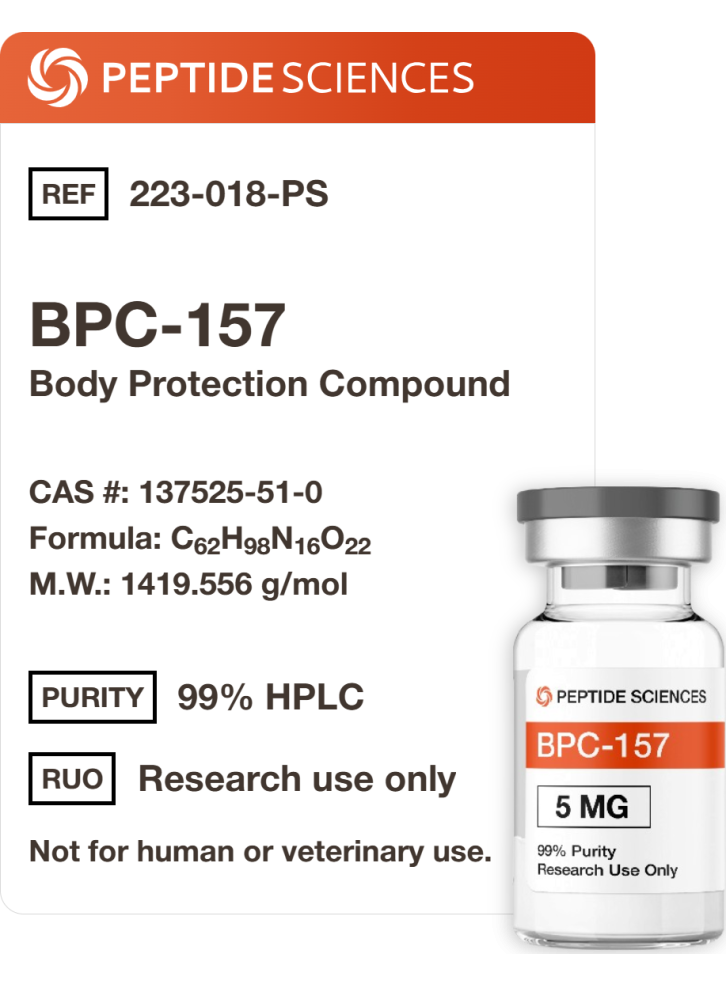
Really couple of commercial research study peptide distributors supply MS/MS data on regular COAs-- it is typically scheduled for pharmaceutical-grade materials and advanced research study setups. Nevertheless, some premium providers do provide it on ask for critical sets. If sequence confirmation is important for your research, this is the evaluation to demand. It separates the components of an example based on their differential fondness for a stationary phase (column packaging material) and a mobile stage (solvent system moving through the column). Peptides, with lengthy molecular series and varied conformations, existing challenges for framework verification and content determination. BOC Sciences leverages high-resolution mass spectrometry, LC-MS/MS, and NMR to accurately assess molecular structures and provide highly delicate quantitative assistance.
Solutions
The quality and reliability of a peptide purity measurement depend upon method specifications and paperwork quality. The mobile phase, often a blend of water, acetonitrile, and an acid modifier, is saved in tanks and provided via the system by a high-pressure pump. The pump preserves specific flow rates, generally in the range of 0.5 to 2.0 mL/min relying on the method and column style. High pressure requires the mobile phase through snugly loaded particles inside the column, generating sharper splittings up and greater resolution than typical low-pressure chromatography.Measuring peptide pureness is normally done with analytical high-performance liquid chromatography (HPLC), commonly combined with mass spectrometry (MS) for identification verification. These logical techniques are standard in peptide quality assurance and you will certainly often receive HPLC and MS information with a study peptide order. The main analytical techniques for peptides consist of fluid chromatography (LC), usually HPLC, combined with mass spectrometry (MS) for precise molecular weight decision and sequence recognition.
Peptide Testing: Hplc & Mass Spectrometry Purity Verification
- This grade fits most of in vitro research study applications-- receptor binding assays, enzyme task research studies, and cell society experiments.
- For instance, truncated peptides or chemically customized side-products may bind to targets or generate side effects that puzzle your outcomes.
- Reliable peptide providers always mark their items this way and provide high quality reports with HPLC and MS information to back up the purity level.
- We supply HPLC and UPLC purity analysis workflows that focus on beneficial splitting up instead of just generating a portion.
Dependable peptide testing laboratories will certainly use a collection of modern-day analytical methods-- HPLC coupled with MS is a must, and availability of additional techniques like capillary electrophoresis or amino acid evaluation is a bonus offer. Be careful of labs that do not make use of mass spectrometry alongside HPLC, as this might miss out on crucial identity details. In a similar way, stay clear of laboratories that can not demonstrate verified logical techniques. According to ICH standards, validated techniques indicate the lab has developed the test's accuracy, precision, discovery limits, etc, ensuring the data you get are trustworthy.
While peptide purity isn't the only element, utilizing improperly characterized reagents is an identified contributor to irreproducible results. For a 10-residue peptide with 99.5% combining efficiency, you 'd expect regarding 95% of the final product to be the unabridged series before filtration. For a 30-residue peptide at the same effectiveness, that goes down to about 86%. This is why longer peptides are harder to create at high pureness and normally cost even more. Pureness is the portion of books in the shipment that have every web page printed appropriately, in the right order, without missing phases and no additional pages Article source stuffed in. A 95% pureness implies that out of every 100 "books" in your batch, 95 are excellent duplicates and 5 have some kind of mistake. Credible peptide providers constantly note their products this way and supply quality reports with HPLC and MS data to support the pureness degree. As long as you obtain peptides from a trusted source that offers a full certificate of analysis, you can be certain in the peptide's purity grade and use scope. Peptides are evaluated via a combination of methods, consisting of HPLC for purity, mass spectrometry (MS) for series verification, and nuclear magnetic resonance (NMR) for architectural evaluation. These methods aid identify the peptide's structure, validate the molecular weight, and discover any structural changes or pollutants, making sure the peptide satisfies quality and specification needs. With our extensive peptide evaluation platform, Imaginative Proteomics has created a very sensitive and specialized platform.